
Multiple Sclerosis (MS) Rehabilitation Center: Why is timely attendance important, and how do you choose the right facility?
A rehabilitation center is the best choice for receiving appropriate and optimally tailored rehabilitation following a diagnosis of multiple sclerosis (MS).
In cases of multiple sclerosis, the timing, intensity, and quality of rehabilitation are crucial for maintaining motor function, reducing fatigue, and improving balance. One of the most common questions family members ask is whether rehabilitation should take place at home or at a specialized rehabilitation center.
The truth is that home-based rehabilitation has its place, but in many cases, a specialized rehabilitation center offers significantly better conditions for functional recovery.
Why does therapy at a multiple sclerosis rehabilitation center consistently yield better results than home-based rehabilitation?
- Working in a specialized environment
The home environment often limits therapeutic options. Many homes lack sufficient space for exercises involving walking, balance, standing up, functional activities, and equipment-based physiotherapy.
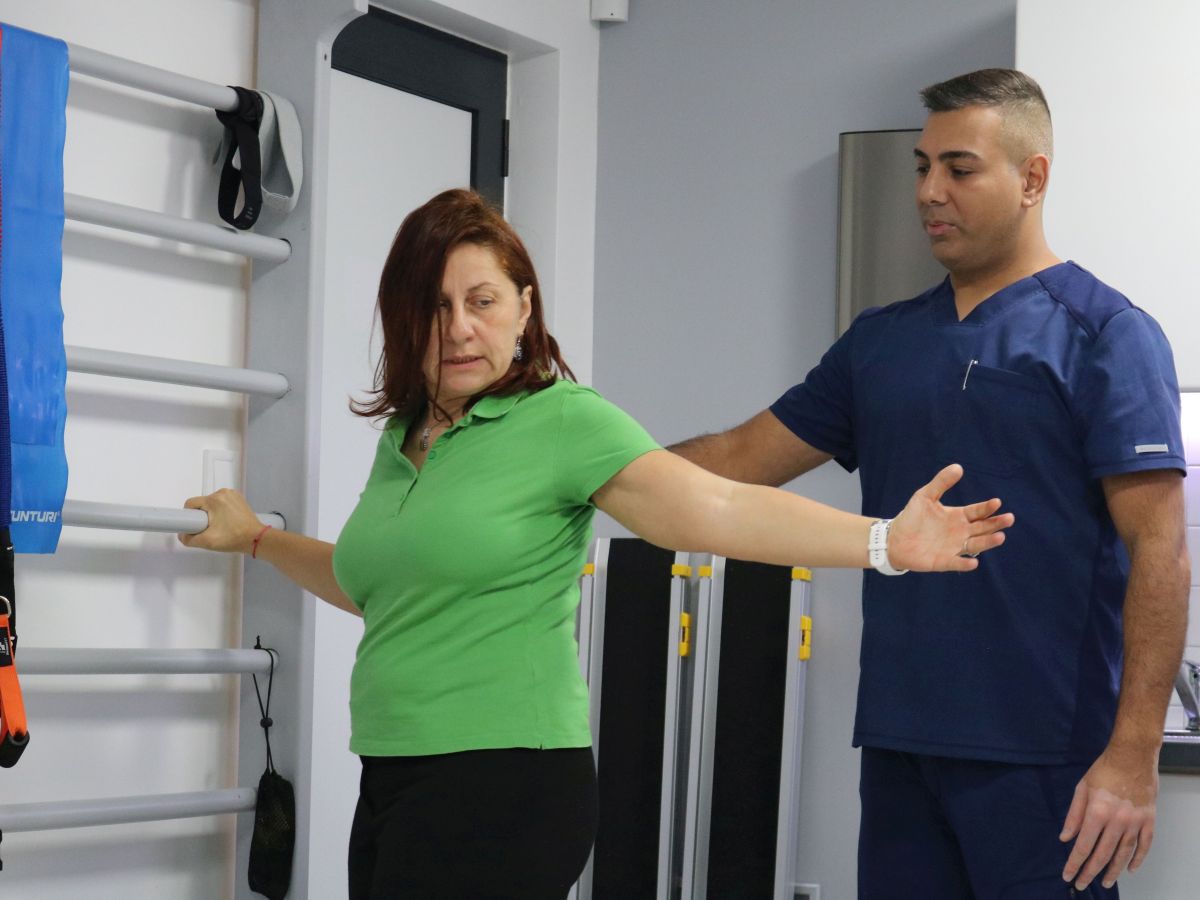
In a rehabilitation center, the patient has access to a specialized environment and equipment that enable:
improved gait phase training, high-quality static and dynamic balance exercises, conditions for patient verticalization, targeted motor tasks, training in standing up and sitting down, etc.
And not least, the use of specialized medical equipment when necessary.
This allows rehabilitation center therapy to be more varied and closer to real-life daily activities.
High-quality neurorehabilitation for multiple sclerosis (MS) requires carefully calibrated exertion and an individualized approach to avoid Uhthoff’s phenomenon. Modern medicine relies on a combination of pharmacological therapy, neurorehabilitation, and device-based physiotherapy.
- Measured therapy intensity
In cases of multiple sclerosis, the nervous system requires frequent, repetitive, and targeted stimuli to activate the mechanisms of neuroplasticity.
At a rehabilitation center, patients typically receive more intensive and structured therapy compared to home-based care.
Rehabilitation centers offer a more effective environment for training balance, attention, memory, coordination, and the ability to perform daily activities independently.
International guidelines and scientific studies consistently indicate that higher-intensity rehabilitation is associated with better functional recovery, greater independence, and improved motor outcomes.
- Better control over therapy quality
Home-based rehabilitation often involves limited time, insufficient intensity, interruptions, lower patient activity levels, and excessive reliance on family members.
In a rehabilitation center, therapy is structured, progress is monitored, and the program can be adjusted according to the patient’s condition. This allows for better control over the workload, safety, and actual progress.
- Psychological Effect and Strong Motivation
The home environment often causes the patient to remain passive. Many patients spend the majority of the day in bed or sitting, leading to further inactivity, a lack of motivation, and poorer outcomes.
Visiting a rehabilitation center fosters a sense of an active recovery process. The patient enters an environment focused on recovery, movement, and activity. This often boosts motivation and engagement with the therapy.
- The specialized neurorehabilitation center combines expert knowledge, innovative technologies, and an individualized approach to each patient.
Thanks to specialized equipment and a deep understanding of the movement disorders associated with neurological conditions, the therapy aims to achieve maximum recovery and a return to a more active and independent lifestyle.
A highly specialized team with specific expertise, trained to work specifically with impairments/lesions to the central and peripheral nervous systems. The rehabilitation center employs specialized techniques—such as Bobath, Vojta, and PNF—that require advanced qualifications and are not routinely used in standard rehabilitation centers. The specialized team understands the cognitive and emotional changes associated with neurological conditions.
Therapy focuses on real-life skills—such as eating, dressing, and balance—rather than merely general mobilization or strength exercises.
A rehabilitation center specializing in neurorehabilitation adopts a long-term approach.
The planned rehabilitation programs are tailored to the stages of nervous system recovery and maintenance.
In cases of multiple sclerosis, the most critical factors are early initiation of rehabilitation, consistency, and a proper therapeutic strategy that ensures sufficient intensity of treatment.
Access to a specialized rehabilitation center offers a superior environment, expanded opportunities, and greater potential for functional recovery and an improved quality of life.
The earlier active and targeted neurorehabilitation begins, the greater the likelihood that the patient will regain and maintain their independence and quality of life.